


19th February 2004
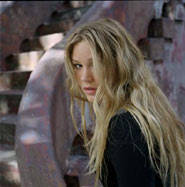
JOSS STONE BIOG
An album of classic and obscure soul covers by a teenage girl from a small rural hamlet just outside Tiverton in Devon might seem surprising, especially in this age of homogenous manufactured pop. Until you hear Joss Stone sing.
"I open my mouth, and it comes out, I can‘t explain it", says Stone, of the voice which prompted US music biz bible Billboard to enthuse "Every so often a voice comes along that literally knocks you off your feet. Joss Stone fits that bill...think of a young Janis Joplin by way of Mavis Staples".
"When Stone sings", added the Boston Globe "It‘s like listening to an old soul record plucked from a dusty stack of forgotten 45s".
Since it‘s US release in the autumn of 2003, The Soul Sessions has attracted a growing chorus of such breathless plaudits, qualified only with disbelief that such a potent and authentic soul singer could have come from what American newspapers like to call "the English village of Devon". And now, having blazed a trail of glory round the prestigious US talk show circuit - Joss Stone is finally ready to show the folks back home what she‘s made of.
Right from very first hearing, it‘s clear that The Soul Sessions heralds the emergence of a new and unique young artist, with a rich, vibrant voice, and a powerful sense of emotional engagement with her material. In this case, the material consists of eight soul classics, ranging from the thoroughly obscure ("Dirty Man" by Laura Lee, "Super Duper Love" by Sugar Billy) to the reasonably familiar (Aretha Franklin‘s "All The King‘s Horses," the Isley Brothers‘ "For The Love Of You"); along with radical reworkings of John "The Lovin‘ Spoonful" Sebastian‘s "I Had a Dream" and Jack White‘s "Fell In Love
With A Girl".
The latter (now retitled "Fell In Love With A Boy") must surely rank as one of 2003‘s most captivating cover-versions. Joss Stone boldly reimagines The White Stripes‘ 2001 garage rock landmark as the classic sixties soul tune its author probably always wanted it to be in the first place, with a little production and instrumental help from Philadelphia hip-hop overlords The Roots, and supporting vocals by Angie Stone (no relation) and the legendary Betty Wright (more of her in a moment).
It‘s pretty special stuff, but every one of the ten songs on this album is approached with a similarly striking blend of burning passion and God-given good taste. Stone‘s delivery of the line "Here‘s my chance, baby, to throw some mud in your face" in the wronged woman classic "Dirty Man" (a song containing enough world-weary rage to test a singer three times her age) is especially exemplary. She doesn‘t "over-soul," deploying ten notes where one will do, or emit ear-splitting falsetto notes for sheer effect. When you
listen to Joss Stone, what you hear is the song, not the vocal coach.
At the same time as catapulting Joss Stone onto the global stage, The Soul Sessions has also turned a well-deserved spotlight onto the group of gifted but long-overlooked African-American musicians who make up her all star backing band. In that fun, funky, and fleeting moment in pop music known as "The Miami Sound" of the Seventies, down-home soul met ascendant disco on the TK, Alston, Glades, and Cat labels. The results included such fondly remembered hits as Betty Wright‘s "Clean Up Woman," Timmy Thomas‘ "Why Can‘t We Live Together," Benny Latimore‘s "Let‘s Straighten It Out," and Little Beaver‘s "Party Down."
Each of these artists played a vital part in the making of The Soul Sessions, for which six out of ten tracks were recorded live at Miami‘s Hit Factory studios in just four days. Like one of those great old movies in which a gang of seasoned pro‘s get together to pull off one last job, the cream of the Miami Sound have been reunited as Joss Stone‘s backing band and, in the best Hollywood fashion - with Thomas on organ, Latimore on piano and Willie "Little Beaver" Hale on guitar - they‘ve never sounded better.
But it‘s the girl with the microphone who no-one can take their eyes off. "If I sang a note, she‘d be right there to trade", marvels veteran seventies soul diva Betty Wright, who co-produced all but one of The Soul Sessions‘ ten tracks, and sings back up on six of them. This is old school, roof-raising, Southern soul, but with a 21st century twist. It‘s performed with a maturity and emotional range remarkable in one so young, and an instinctive sympathy even more extraordinary for one raised so far from the birthplace of the music she loves.
"At first, just hearing my own recorded voice was the weirdest thing", Joss Stone admits. "But with the experience of the studio, now it just comes naturally". She‘s already come a long way since the BBC TV talent show appearance brought her, at the tender age of 14, to the attention of UK based management company Freshwater Hughes. They ultimately accepted an offer from Steve Greenberg‘s S-Curve Records in the US with Relentless releasing in the UK and Joss is delighted to now have the opportunity of working with both labels under the umbrella of EMI. Relentless are proud and excited to be representing the girl they first saw aged 14 in a Devon village hall. Joss, meanwhile, is taking it all in her stride - and as for the inevitable debate about a white girl making "black" music, Stone is just not buying it - "I‘m just doing the music I love. I don‘t think I have a black voice or white voice. I have a voice. How can you put a colour to a voice? Soul isn‘t just black music - it‘s music. It‘s Soul".


David Jensen Photography:
https://www.davidjensen.co.uk/